The Short Answer
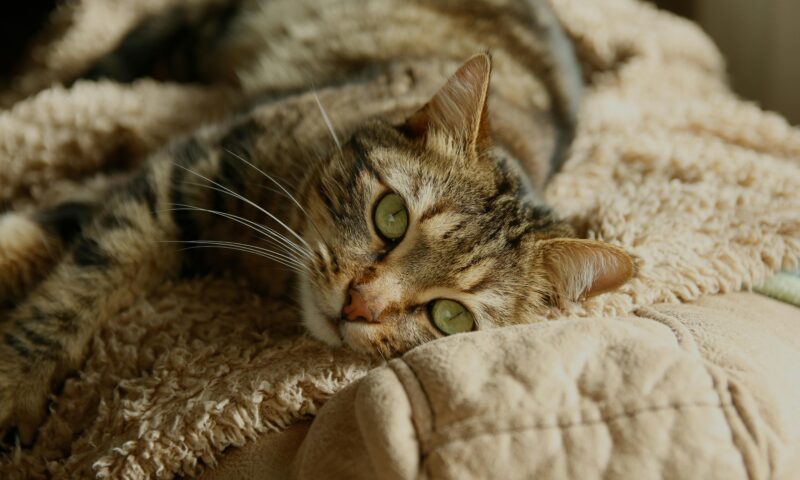
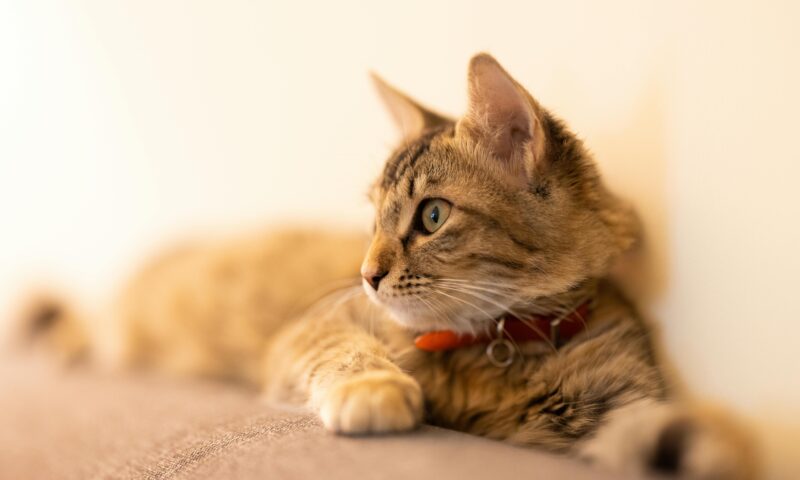
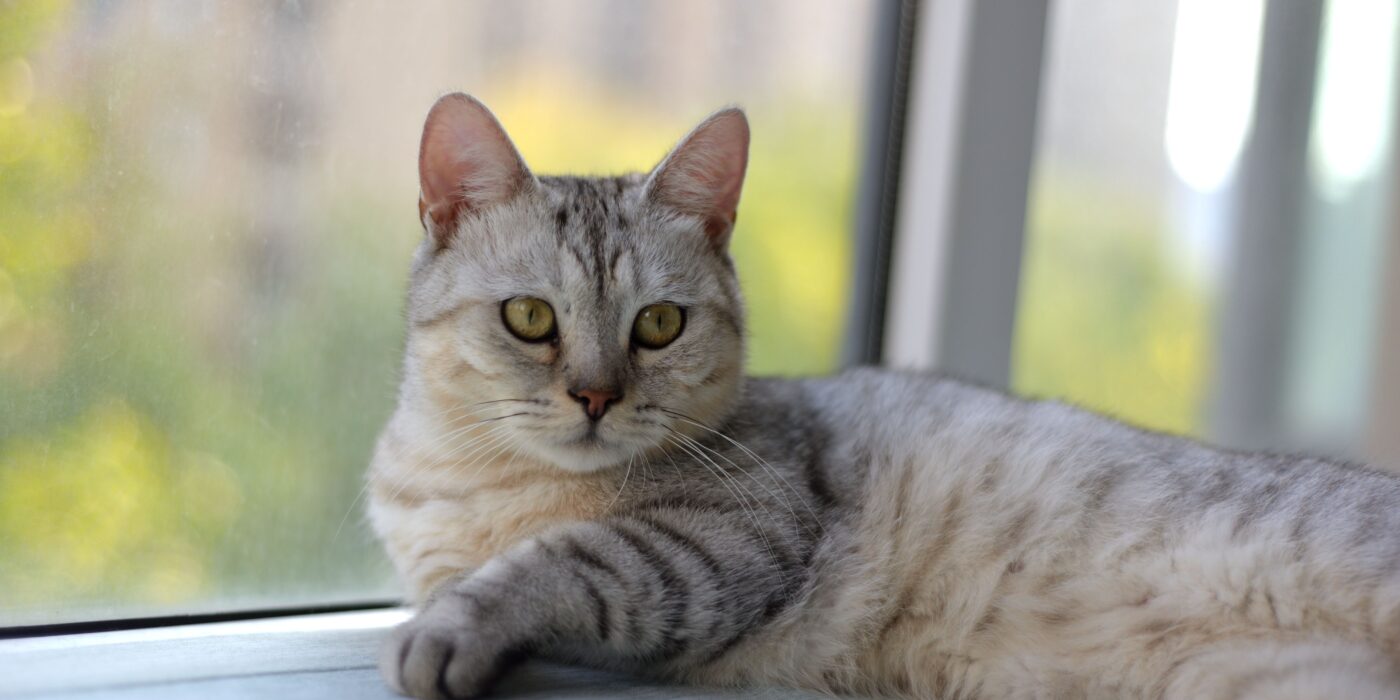
Cats sleep 12-16 hours a day because they’re obligate carnivores whose hunting strategy is high-intensity bursts separated by long recovery periods. They conserve energy aggressively between hunts. Your indoor cat has no hunts to recover from, so the conserved energy never gets spent — and the sleeping continues anyway, because millions of years of evolution don’t care about your indoor enrichment setup.
The Mathematics of Cat Sleep Are Mildly Insane
Let’s do the numbers. 16 hours of sleep out of 24 means your cat is conscious for 8 hours a day. Of those 8 hours, a significant portion is spent in that half-alert, half-dozing state that looks awake but is really just light snoozing with slightly open eyes. The amount of time your indoor cat spends in genuinely alert, active engagement with the world is — conservatively — somewhere between 3 and 5 hours daily.
For this, you provide food, water, shelter, warmth, entertainment, veterinary care, and love.
The cat sleeps through the remaining 19-21 hours.
This is an extraordinary deal for the cat. It also makes complete evolutionary sense.
Why Cats Sleep So Much: The Hunting Explanation
Domestic cats are obligate carnivores — they cannot meet their nutritional needs from plant matter and must eat meat. Their wild ancestors (and feral cats today) hunted small prey: mice, birds, lizards, insects. This hunting strategy is fundamentally different from grazing or scavenging.
Predatory hunting, especially for small, fast prey, requires:
– Intense concentration (stalking phase)
– Explosive speed and agility (pursuit and capture phase)
– Significant muscular effort in a short burst
This burns substantial energy in a brief period. The recovery requirement is equally significant. Between successful hunts — which wild felids do not achieve every attempt — extended rest is not laziness. It’s physiological necessity. The muscles need repair, the metabolic debt needs repayment, the sensory systems need to reset.
John Bradshaw notes in Cat Sense that even well-fed, completely indoor cats retain this energy conservation strategy. The body doesn’t know there’s food in a bowl in the kitchen. It’s prepared for the possibility of no food for an extended period. It sleeps.
How Cat Sleep Architecture Works
Cats, like dogs, are polyphasic sleepers — they cycle through many short sleep periods rather than one long consolidated block. This is different from human sleep architecture (one long nocturnal block) and again reflects hunting-predator biology: a cat that slept solidly for 8 hours would be extremely vulnerable and would also miss opportunities.
Cats cycle through:
– Light sleep (drowsy): Eyes may be partially open, whiskers may twitch, cat can become alert instantly
– Deep sleep (SWS — slow-wave sleep): More complete rest, the body is doing significant repair work
– REM sleep: Active dreaming phase — visible rapid eye movements, twitching, vocalisation, paddling limbs
A sleep cycle in cats is shorter than a human cycle — approximately 30 minutes, compared to 90 minutes in humans. This means cats pass through more complete cycles across their day and can integrate short “power naps” in ways that provide full restorative sleep.
REM sleep in cats has been confirmed through EEG (electroencephalogram) research. During REM, cats show the same brain activity patterns as dreaming humans. The twitching paws and muffled chirrups you see during deep sleep: a dream in progress.
Do Cats Sleep More Than Dogs?
Yes — cats typically sleep more than dogs.
Dogs average 12-14 hours; cats average 12-16 with outliers reaching 20 hours in kittens and senior cats. The difference relates to the prey models: dogs are pursuit hunters that can sustain moderate exertion over long periods (more wakefulness required for group hunting coordination). Cats are ambush predators requiring explosive bursts and longer recovery.
Big cats — lions, tigers, leopards — sleep even more, reportedly up to 20 hours daily. The pattern scales with hunting strategy.
Kittens and Senior Cats: The Sleep Extremes
Kittens sleep the most of all — 15-20 hours daily. This isn’t laziness. Growth hormone is released during sleep; the kitten’s neurological and physical development is occurring primarily during sleep phases. The enormous energy demand of rapid growth requires equally enormous recovery. Trying to “keep a kitten awake” to play with it is actively counterproductive to its development.
Senior cats also sleep more — often 16-20 hours. The reasons are multiple:
– Lower overall energy levels
– More restorative sleep needed per unit of activity
– Potential underlying health conditions (arthritis, hyperthyroidism, cognitive decline) that cause fatigue
– Reduced motivation for active engagement with the environment
A sudden increase in sleep in a previously active adult or middle-aged cat warrants a vet check — it can indicate illness, pain, or metabolic changes.
Crepuscular, Not Nocturnal: A Common Misunderstanding
Cats are often described as nocturnal. They’re technically crepuscular — most active at dawn and dusk, the times when their primary prey (small rodents and birds) is also most active.
This explains the 3am zooming, the 5am face-sitting, and the general impression that your cat has reversed its schedule from yours. It hasn’t — it’s just that “dawn” and “dusk” in the original sense didn’t account for you having to be at work at 8am.
Indoor cats often adjust their activity patterns to match their owners’ schedules to a surprising degree — because they’ve learned that the owner is the most interesting thing in the environment, and activity calibrates to interesting things being present.
Is My Cat Sleeping Too Much? Signs Something Is Wrong
Baseline varies by individual cat, age, and breed. The concern is change, not absolute number.
See your vet if:
– Your normally active cat has significantly increased sleep without environmental explanation
– Sleep is accompanied by appetite changes, weight changes, or reduced interest in previously enjoyed activities
– The cat seems lethargic when awake — listless, unresponsive, uninterested
– Senior cat shows dramatic behaviour changes (could indicate cognitive dysfunction, pain, or metabolic disease)
Quick Answers to Everything Else
Why does my cat sleep on my head/face?
Warmth, your scent, proximity to your breathing and heartbeat — all are comforting. Your head moves less than the rest of you in sleep. Also, possibly, the cat has decided this is where it goes.
Why does my cat sleep in weird positions?
The “loaf” (tucked paws) conserves heat. The “belly up” (fully exposed) signals maximum comfort and trust. The “sphinx” maintains alert readiness. Position reflects temperature needs, alertness level, and trust state.
My cat sleeps in a different spot every day. Is that normal?
Yes — wild cats rotate resting spots to prevent accumulation of parasites and to make their patterns less predictable to other predators. Rotation is instinctive.
Should I let my cat sleep in my bed?
Personal choice. Main considerations: sleep disruption (cats are active at dawn/dusk, which may overlap with your sleep) and hygiene. No evidence it causes behavioural problems. Plenty of cats and their owners do this happily.
The Bottom Line
Your cat sleeps 16 hours because it’s a precision ambush predator that spent millions of years evolving to conserve every calorie between hunts. Your apartment has no prey. The hunting drive remains. The sleep requirement remains. The accommodation between these facts is your cat’s schedule, and it is not negotiable.
Get used to it. It’s one of the better parts of having a cat.
Related Posts
- Do Cats Dream?
- Why Is My Cat Active at 3am?
- Senior Cat Changes: What’s Normal and What Isn’t
- Why Does My Cat Sleep on Me?
Sources:
Bradshaw, J. (2013). Cat Sense: How the New Feline Science Can Make You a Better Friend to Your Pet. Basic Books.
Cornell Feline Health Center — Normal cat behaviour.
Jouvet, M. (1979). What does a cat dream about? Trends in Neurosciences.
Turner, D.C. & Bateson, P. (eds.) (2014). The Domestic Cat: The Biology of Its Behaviour. Cambridge University Press.
Sources & References
- Horowitz, A. (2009). Inside of a Dog. Scribner.
- Bradshaw, J. (2013). Cat Sense. Basic Books.
- McConnell, P. (2002). The Other End of the Leash. Ballantine Books.
All factual claims on Pawsidor trace to peer-reviewed research, university studies, or books by credentialed animal scientists. Learn about our editorial standard →