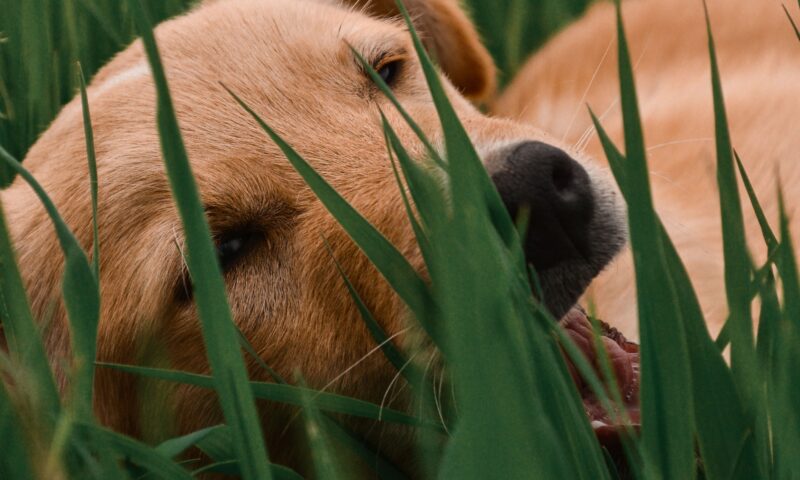
Dog licking vs nibbling? The Short Answer
Dog licking vs nibbling? Licking and nibbling sit right next to each other on a dog’s arousal scale, but they’re not the same signal. Licking is investigative or affectionate contact with the tongue alone; nibbling adds gentle, controlled mouth pressure, and usually shows up once a dog is a step more excited than plain licking reflects.
How to Tell Them Apart
Licking involves only the tongue, tends to be slower, and can happen at almost any energy level, from a calm greeting to an excited one. Nibbling — sometimes called “love bites” or gentle mouthing — brings the teeth into light, controlled contact with your skin or clothing, without real pressure behind it. As we cover in our piece on lick-then-bite escalation, this usually reflects a dog moving one rung up a fairly predictable excitement ladder: approach, lick, paw, nibble, play-bite.
Why Some Dogs Nibble More Than Others
Nibbling is especially common in breeds and individual dogs with a strong retrieving or herding background, where gentle mouth control was specifically useful, and it’s also more common in dogs that missed out on refining their bite inhibition through puppyhood play with littermates. Both groups tend to have a lower threshold for bringing the mouth into a greeting or play interaction.
When Nibbling Is a Non-Issue
Soft, controlled nibbling that doesn’t leave marks, stops the instant you go still, and happens during clearly relaxed, loose-bodied interaction is a normal variation of affectionate contact for many dogs — not a warning sign or a discipline problem.
When to Pay Closer Attention
Nibbling is worth addressing more deliberately if the pressure is increasing over time, if it happens alongside stiff body language rather than a relaxed, wiggly posture, or if it shows up with unfamiliar people or children rather than just you. In those cases, the same redirection principles used for excessive licking — removing the reward, offering an alternative behavior — apply just as well here.
Quick Answers to Related Questions
Is nibbling a sign my dog is asking me to stop petting it?
Sometimes, especially if it appears alongside a head turn or stiffening. Context matters more than the nibble itself.
Should I worry if my puppy nibbles a lot?
Generally not — puppies are actively developing bite inhibition, and gentle nibbling during this stage is a normal, expected part of that learning process rather than a red flag.
The Bottom Line
So, dog licking vs nibbling? Nibbling isn’t a more serious version of licking — it’s simply one notch further along the same arousal curve, and in most dogs it stays perfectly benign. Watch the body language around it rather than the behavior in isolation.
Related Posts
Why Does My Dog Lick Me?
Why Does My Dog Lick Me and Then Bite or Nibble?
Dog Body Language Guide
Sources
Bekoff, M. (1995). Play signals as punctuation: The structure of social play in canids. Behaviour.
ASPCA — Mouthing, Nipping and Play Biting in Adult Dogs.
All factual claims on Pawsidor trace to peer-reviewed research, university studies, or books by credentialed animal scientists.
Sources & References
- Horowitz, A. (2009). Inside of a Dog. Scribner.
- Bradshaw, J. (2013). Cat Sense. Basic Books.
- McConnell, P. (2002). The Other End of the Leash. Ballantine Books.
All factual claims on Pawsidor trace to peer-reviewed research, university studies, or books by credentialed animal scientists. Learn about our editorial standard →