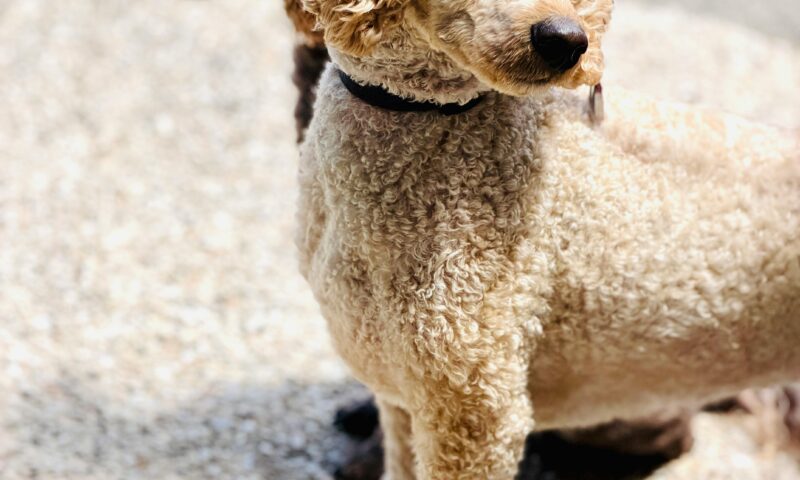
Why Does My Dog Follow Me Everywhere?
Dogs usually follow their owners because they see them as their primary attachment figure. You are their source of food, safety, routine, and companionship. In most cases, this is a normal sign of trust. However, sudden clinginess or distress when you are apart may indicate illness or separation anxiety.
You Are Your Dog’s Whole World. Act Accordingly.
Your dog follows you because you are its primary attachment figure, its source of food and safety, its most interesting companion, and the anchor of its social world. It’s not clinginess in the human sense, it’s an expression of a bond tens of thousands of years in the making. The bathroom thing is because you have, inexplicably, closed a door between you and your dog.
Think about your dog’s day.
You wake up: first social event. You walk to the kitchen: potential food event. You sit down: lap opportunity. You pick up keys: anxiety adjacent event. You leave: social deprivation. You come back: best moment of the day, every day.
Every movement you make carries potential significance to an animal whose social universe is built almost entirely around you. The following isn’t a quirk, it’s the logical behaviour of a deeply socially bonded creature tracking the most important individual in its environment.
Five Specific Reasons Your Dog Follows You
1. You are the primary attachment figure
You are safe, familiar, and the centre of their social world. Following keeps them close to that anchor.
2. Food and resource association
You control the food. The bowl, the treats, the refrigerator, all of it comes from you. Dogs are excellent at learning patterns, and “where the person goes, things happen” is one of the most reliable patterns in their world. The kitchen especially will draw a following dog like a magnet.
3. Boredom and understimulation
A dog that isn’t getting enough physical exercise or mental stimulation will follow its owner as a way of staying near the most interesting thing available. This is particularly true in dogs that spend long periods alone, when you’re home, you are the entertainment.
4. Breed and genetics
Some breeds were specifically developed to work closely alongside humans, herding dogs (Border Collies, Australian Shepherds), companion breeds (Vizslas, Weimaraners, Italian Greyhounds). These dogs have been selectively bred for centuries to stay close to a person. Velcro dog behaviour in a Vizsla isn’t separation anxiety, it’s the breed doing exactly what it was designed to do.
5. Learned behaviour
If following you has historically resulted in good things, treats, walks, play, attention, your dog has learned that proximity to you pays off. This is pure operant conditioning working exactly as it should.
The Science of Why Dogs Bond to Specific Humans
Dogs are uniquely wired for human attachment
Domestication gave dogs something wolves don’t have: a specific attunement to human social cues. Research at the Wolf Science Center in Austria, and work by cognitive scientists including Brian Hare of Duke University’s Canine Cognition Center, has consistently shown that dogs (but not wolves raised identically) spontaneously look to humans for guidance, reference human gaze and pointing gestures, and seek comfort from humans when stressed.
This attunement is genetic, not just learned. Dogs are built to bond with us.
Alexandra Horowitz, in Our Dogs, Ourselves (2019), frames this as the central dynamic of dog domestication: humans didn’t just train dogs to perform tasks, dogs and humans co evolved a mutual social world. Dogs became attuned to us in ways no other species has.
Secure attachment mirrors human infant caregiver bonding
In 2014, researchers at Eötvös Loránd University in Budapest used the Strange Situation paradigm, originally designed to study human infant attachment, to test dog owner bonds. The results were striking: dogs showed the same patterns of secure and insecure attachment to their owners as human infants do to caregivers.
Dogs with secure attachment to their owners were calmer when left with a stranger, more exploratory when the owner was present, and more distressed during separation. The owner wasn’t just a food source, they were a genuine safe base. Patricia McConnell describes this in The Other End of the Leash: dogs treat their owners the way children treat parents, as the anchor that makes the world navigable.
Does Breed Actually Change How Much a Dog Follows You?
Yes, considerably. Dogs bred to work in constant visual contact with a handler (herding and gundog breeds) or bred purely for companionship tend to shadow their owners far more than independent, scent driven, or guardian breeds bred to work at a distance.
Very high ●●●●●
Very high ●●●●●
High ●●●●○
High ●●●●○
High ●●●●○
Low ●●○○○
Low ●○○○○
None of this is a diagnosis. A low following breed that suddenly becomes clingy, or a high following breed that stops following and withdraws, is a bigger behavioural signal than the breed tendency itself.
Does Age Change Why a Dog Follows You?
Puppies
Puppies follow almost everyone. They haven’t formed a single primary attachment yet, and following is part of how they learn what’s safe and what isn’t. This settles as they mature and usually narrows to one or two attachment figures by adulthood.
Adult dogs
By adulthood, following usually narrows to whoever the dog considers its primary attachment figure, typically the person who feeds, walks, and handles the dog most consistently.
Senior dogs
An older dog that suddenly starts following more closely is worth paying attention to. New or increased clinginess in a senior dog is a common early sign of vision loss, hearing loss, or canine cognitive dysfunction, since the dog is compensating for reduced sensory input by staying physically close to its owner. It’s also a common early sign of pain.
Is your senior dog’s clinginess new? Use the Dog Symptom Checker to see whether it’s worth a vet visit.
When Following You Could Mean Something Is Wrong
Most following is bonding, not a problem. But a dog suddenly becoming unusually clingy can sometimes signal:
- pain
- vision loss
- hearing loss
- cognitive dysfunction
- hormonal disease
- illness
- medication side effects
This is especially worth investigating if:
- your dog never did this before
- they’re older
- they’re also eating less
- they’re hiding
- they’re restless
Is your dog’s clinginess new or sudden? Run it through the Dog Symptom Checker before assuming it’s just affection.
When You Probably Don’t Need to Worry
If most of these are true, the following is almost certainly healthy attachment, not a problem:
- ✅ your dog relaxes when you’re nearby
- ✅ eats normally
- ✅ enjoys walks and play
- ✅ can settle on its own
- ✅ doesn’t panic when left alone
The Bathroom Question
Because you closed a door.
To your dog, closing a door means separation from its attachment figure, and there’s no logic that explains why you’d do that. Outside, something might be happening. In there, you might need help. At minimum, your dog is going to sit outside and wait, and if the door was left open, it’s coming in.
There’s also a practical consideration: bathrooms are full of smells. Human scent is concentrated there. For a nose first creature, the bathroom is genuinely interesting.
Most dogs will sit patiently if they can hear you. The ones that scratch at the door or whine are expressing genuine low level anxiety about the separation, not being dramatic.
Common Myths About Following Behaviour
Myth: “My dog follows me because it wants food.”
Reality: Food matters, but attachment is usually the stronger driver. Dogs with no food motivation still shadow their attachment figure closely.
Myth: “My dog is trying to dominate me.”
Reality: Modern behavioural science does not support dominance as an explanation for ordinary following behaviour. It’s attachment, not a bid for status.
Myth: “I should ignore my dog so it doesn’t get too attached.”
Reality: Healthy attachment isn’t a problem to correct. The goal isn’t less bonding, it’s a dog that can also settle independently.
Is It Separation Anxiety, or Just Normal Following?
This is the important distinction, and the line matters practically.
Normal following behaviour:
- Dog follows you around the house but settles when you stop
- Dog shows normal behaviour when left alone, or mild adjustment that resolves within minutes
- Dog is not destructive, doesn’t soil the house, doesn’t injure itself when you leave
- Following is calm and doesn’t escalate when you move
Signs of actual separation anxiety:
- Intense distress that begins before you even leave, reading departure cues like keys, shoes, bag
- Destructive behaviour focused near exits when left alone
- Elimination in the house from a house trained dog when alone
- Excessive vocalisation (howling, barking) that doesn’t stop
- Self injury (chewing paws, clawing at doors) when alone
- Dog cannot settle even when owner is home and stationary
Estimates of how many dogs show separation related behaviours vary widely by study and definition, from single digits to over half of dogs assessed. A large Finnish survey of more than 3,000 dogs across 192 breeds found a separation anxiety prevalence of 17.2 percent using a validated owner questionnaire (Salonen et al., 2020, published in Scientific Reports). Clinical diagnosis rates at veterinary behaviour practices tend to run lower than owner reported estimates, since not every dog with mild separation related behaviour meets the clinical threshold.
Separation anxiety is a treatable anxiety disorder, not a training problem and not the dog being dramatic. If it’s happening, a certified veterinary behaviourist or a trainer with anxiety specialisation is the right resource.
Quick self check
Mostly checked: the behaviour is most likely normal attachment. Several unchecked, especially around leaving the house: worth reading the separation anxiety signs above closely, and considering a vet or behaviourist consult.
What Should I Actually Do About It?
If your dog follows you constantly and it isn’t a medical or anxiety concern, here’s the practical response:
- Give daily mental enrichment, not just physical exercise
- Feed at least one meal a day through a puzzle toy or scatter feed
- Teach a reliable “place” or “settle” cue
- Reward calm independence, not just calm proximity
- Don’t punish following, it’s not misbehaviour
- Practice short, low key departures and returns to build tolerance
- Increase overall exercise if boredom is a likely driver
Should I Be Worried About Too Much Following?
Normal following that doesn’t interfere with the dog’s ability to settle is fine. A dog that can follow you to the kitchen and then go lie down when you start working is healthy and bonded.
A dog that cannot settle unless it is physically touching you, that escalates into distress if you move from room to room, or that has never been taught any independence is worth working with, not because the following is bad, but because a dog that can only cope with constant proximity is more vulnerable to distress when separation is unavoidable.
Teaching a reliable “place” or “settle” cue, rewarding the dog for relaxing independently in a specific spot, is genuinely kind to a velcro dog. It gives them a way to feel secure that isn’t entirely dependent on your physical location.
Frequently Asked Questions
Why does my dog follow me and not my husband?
Primary attachment usually develops with the person who provides the most consistent care, feeding, walking, play, grooming.
Why does my dog follow me everywhere but ignores everyone else?
That’s a clear single primary attachment. Common and not a problem, though it’s worth building the dog’s relationship with other household members too.
Why does my dog suddenly follow me everywhere?
A sudden change is more significant than a gradual one. Consider recent stress (new pet, move, schedule change) first, and rule out pain or illness if there’s any other change in appetite, energy, or behaviour. See the medical causes section above.
Why does my puppy follow me everywhere?
Normal. Puppies haven’t formed a settled primary attachment yet and are learning what’s safe by staying close to people generally.
Why does my senior dog follow me everywhere?
Often linked to vision loss, hearing loss, or cognitive changes that make the dog rely more on physical proximity. Worth a vet check if it’s a new development.
Why does my female dog follow me?
Sex isn’t a strong predictor of following behaviour on its own, attachment style, breed, and individual temperament matter far more.
Why does my dog follow me at night?
Same attachment drive as during the day. Some dogs are also more alert to nighttime sounds and stay close for reassurance.
Why does my dog wait outside the bathroom?
Covered above, closed doors mean separation from the attachment figure, and bathrooms are scent rich environments dogs find interesting anyway.
Why does my dog cry when I close the door?
Mild vocal protest at a closed door is common and usually not a concern on its own. It becomes worth addressing if it escalates to prolonged distress or happens every time you’re out of sight, not just behind doors.
Why does my dog follow me after surgery?
Dogs are highly attuned to changes in scent, movement, and behaviour. Post surgical dogs often smell different and move differently, which can increase an already bonded dog’s need to stay close and monitor you.
Why does my dog follow me when I’m pregnant?
Widely reported anecdotally and consistent with dogs’ sensitivity to hormonal and scent changes, along with picking up on shifts in your energy, movement, and routine.
Why does my dog follow me when I’m sick?
Dogs are sensitive to changes in scent, behaviour, and energy levels, and many increase proximity seeking when their attachment figure seems unwell.
Tools to Help You Figure Out What’s Normal
- If the following is sudden or paired with other symptoms, use the Dog Symptom Checker to rule out a medical cause.
- If your dog is a puppy or a senior and you’re wondering whether age explains the clinginess, check the Puppy Growth Chart or the Dog Age Calculator for context on their life stage.
- If boredom and excess energy seem to be driving the following, the Dog Calorie Calculator can help you check whether they’re getting enough food to support their activity level, alongside more enrichment.
The Bottom Line
Most dogs follow their owners because of a healthy emotional bond built through companionship, care, and routine. In the majority of cases, it’s a sign of trust, not a behavioural problem.
However, if your dog’s clinginess appears suddenly, comes with distress when you’re apart, or is accompanied by changes in appetite, sleep, or behaviour, it’s worth investigating further. Early recognition of anxiety or a medical condition makes treatment far easier.
If you’re unsure whether your dog’s behaviour is normal, use the free tools above to help you decide whether simple training is enough or whether it’s time to consult your veterinarian.
Related Posts
- Does My Dog Actually Love Me?
- Separation Anxiety in Dogs: What It Really Looks Like
- Why Does My Dog Sleep on My Feet?
- Why Does My Dog Stare at Me?
Sources:
Horowitz, A. (2019). Our Dogs, Ourselves: The Story of a Singular Bond. Scribner.
McConnell, P. (2002). The Other End of the Leash. Ballantine Books.
Topál, J. et al. (2014). Attachment to humans: A comparative study on hand reared wolves and differently socialized dog puppies. Animal Behaviour.
Hare, B. and Woods, V. (2013). The Genius of Dogs. Dutton.
Salonen, M. et al. (2020). Prevalence, comorbidity, and behavioral variation in canine anxiety. Scientific Reports.
Sources & References
- Horowitz, A. (2009). Inside of a Dog. Scribner.
- Bradshaw, J. (2013). Cat Sense. Basic Books.
- McConnell, P. (2002). The Other End of the Leash. Ballantine Books.
All factual claims on Pawsidor trace to peer-reviewed research, university studies, or books by credentialed animal scientists. Learn about our editorial standard →