The Short Answer
Cats meow almost exclusively at humans, not at other adult cats — it’s a vocalization they’ve adapted specifically because it works on us. Excessive meowing usually means one of a few things: your cat wants something (food, attention, a door opened), is stressed or bored, or — especially in cats over 10 — has an underlying medical issue like hyperthyroidism, kidney disease, or cognitive decline. Sudden or persistent increases in meowing, particularly in older cats, are worth a vet visit rather than a shrug.
Why Cats Meow at All
Adult cats rarely meow at each other. Kittens meow at their mothers, but once cats mature, they largely switch to scent marking, body language, and touch to communicate with other cats. The meow that persists into adulthood is aimed almost entirely at people — cats appear to have kept and refined a kitten vocalization because it reliably gets a response from humans, in a way that hissing or scent-marking never could. In effect, your cat’s meow is a tool it developed specifically for you.
That’s part of why understanding meowing matters for the broader question of whether cats are attached to their owners at all — vocalizing at a specific person, rather than at cats or objects in general, is itself a form of targeted social communication.
Common, Non-Medical Reasons for Excessive Meowing
- Hunger or anticipation of feeding — the most common reason, especially if meowing clusters around usual mealtimes or the kitchen.
- Attention-seeking — some cats learn that meowing reliably produces play, food, or affection, and repeat what works.
- Boredom or under-stimulation — especially in indoor cats without enough environmental enrichment.
- Stress or a change in routine — a move, a new pet, a schedule change, or an owner’s absence can all increase vocalization. See Cat Separation Anxiety if the meowing clusters specifically around your departures.
- Wanting access to a room or the outdoors — meowing at doors is a common, specific request behavior.
- Mating behavior — unspayed/unneutered cats can vocalize loudly and persistently when in heat or seeking a mate.
When Meowing Is a Medical Red Flag
A sudden increase in vocalization, especially in a cat over 10 years old, is one of the more common early signs of several treatable medical conditions:
- Hyperthyroidism — an overactive thyroid speeds up metabolism, causing restlessness, increased appetite, weight loss, and frequent vocalization, often worse at night. This is one of the most common medical causes of new excessive meowing in senior cats.
- Chronic kidney disease — can cause disorientation, increased thirst, and vocalization, particularly at night.
- Feline cognitive dysfunction — an age-related cognitive decline similar to dementia, which can cause confused, aimless yowling, especially after dark.
- Hypertension or pain — high blood pressure and untreated pain (arthritis, dental disease) can both increase vocalization.
- Hearing loss — cats losing their hearing sometimes vocalize louder or more often because they can no longer gauge their own volume.
If the meowing is new, escalating, or paired with weight loss, increased thirst, appetite changes, or disorientation, treat it as a reason to see a vet rather than a behavior problem to train away.
Nighttime Meowing Specifically
Cats are naturally more active at dawn and dusk, so some nighttime vocalization is normal, especially in younger cats. But persistent, loud yowling at night in an older cat is disproportionately linked to hyperthyroidism, cognitive decline, or sensory loss — the kind of vocalization that sounds distressed or aimless rather than purposeful is the more concerning pattern.
What to Do About Excessive Meowing
- Rule out medical causes first in cats over 10, or any cat with a sudden change — a basic senior blood panel catches most of the common culprits.
- Stick to a consistent feeding schedule so meowing isn’t reinforced by unpredictable food timing.
- Don’t reward attention-seeking meowing with immediate food or play — wait for a quiet moment before responding, so the cat isn’t learning that louder or longer meowing works better.
- Add enrichment — puzzle feeders, window perches, and scheduled play sessions reduce boredom-driven vocalizing.
- Keep a predictable routine — sudden changes are a common trigger for stress-related meowing.
Quick Answers to Everything Else
Is it normal for cats to meow a lot?
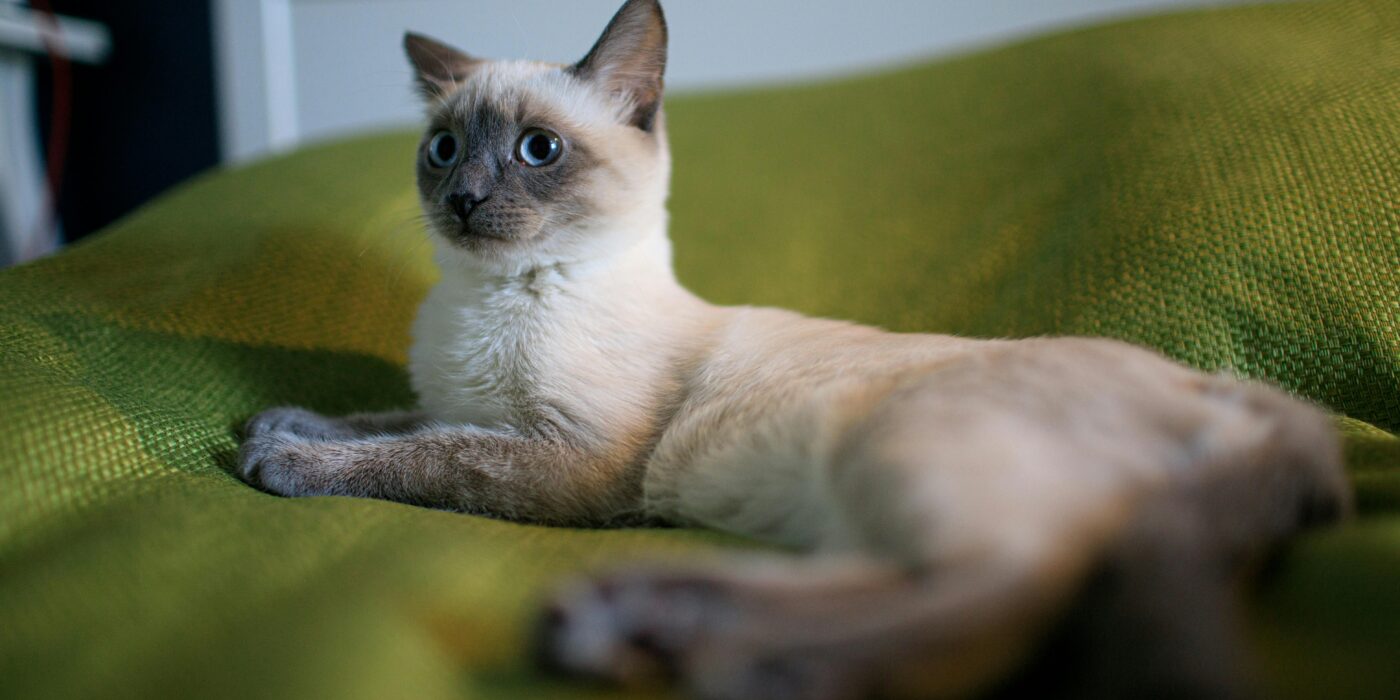
Some cats (Siamese especially) are simply more vocal by temperament. What matters more than volume is whether the pattern has changed recently.
Why does my cat meow right before I leave the house?
Often a request (food, attention) tied to routine cues, but if it’s paired with other distress signs, it may be an early sign of separation anxiety.
Why does my senior cat suddenly meow so much at night?
This is one of the more common presentations of hyperthyroidism or feline cognitive dysfunction in older cats and is worth a vet visit rather than home remedies.
Do cats meow to communicate with other cats?
Rarely as adults. Meowing is primarily directed at humans; cats mostly use scent and body language with each other.
The Bottom Line
Your cat’s meow is a message aimed specifically at you, refined because it works on humans in a way it never worked on other cats. Most excessive meowing has an ordinary explanation — hunger, boredom, a routine that’s shifted. But a real change in how much or how a cat vocalizes, especially later in life, is one of the more reliable early warning signs veterinary medicine has for treatable disease. Don’t let “cats just do that” be the explanation you settle for if the pattern has actually changed.
Related Posts
- Do Cats Miss Their Owners? What Science Says
- Cat Separation Anxiety
- Cat Behavior Guide
- Why Does My Cat Follow Me Everywhere?
Sources:
Bradshaw, J. (2013). Cat Sense: How the New Feline Science Can Make You a Better Friend to Your Pet. Basic Books.
Nicastro, N. & Owren, M.J. (2003). Classification of domestic cat (Felis catus) vocalizations by naive and experienced human listeners. Journal of Comparative Psychology.
Cornell University College of Veterinary Medicine — Feline Health Center, Hyperthyroidism in Cats.
Sources & References
- Horowitz, A. (2009). Inside of a Dog. Scribner.
- Bradshaw, J. (2013). Cat Sense. Basic Books.
- McConnell, P. (2002). The Other End of the Leash. Ballantine Books.
All factual claims on Pawsidor trace to peer-reviewed research, university studies, or books by credentialed animal scientists. Learn about our editorial standard →