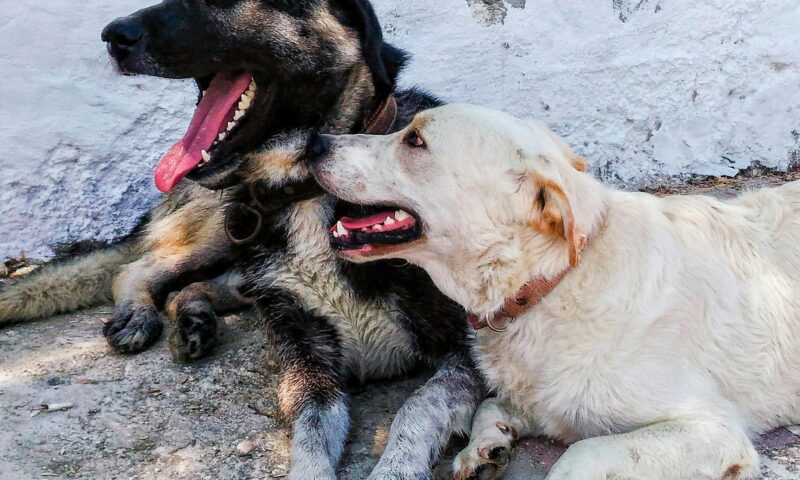
Why Dogs Age Faster Than Humans? The Brilliant Science Every Owner Must Understand
Your dog was a puppy last year. Now they have grey around their muzzle and they take the stairs a little more carefully. If you have ever sat with your dog and felt the quiet unfairness of how quickly they seem to age, you are not alone. Understanding why dogs age faster than humans will not make their lifespans longer, but it will change how you see every stage of their life, help you recognise when ageing becomes a health concern, and give you the science to make decisions that genuinely extend their healthy years. Here is what the research actually says.
The 7 Year Rule Is Wrong and Here Is Why That Matters
For decades, the standard answer to how dog years work has been simple: one dog year equals seven human years. It is tidy, easy to remember, and almost completely inaccurate.
The rule likely originated from a rough observation that humans live to around 70 and dogs live to around 10, making the ratio approximately 7 to 1. But this ignores the fact that dogs do not age in a straight line. A one year old dog is not equivalent to a 7 year old child. They are sexually mature, physically fully developed, and in many ways equivalent to a human in their mid to late teens or early twenties.
A groundbreaking 2020 study published in Cell Systems by researchers at the University of California San Diego, led by geneticist Trey Ideker, used DNA methylation patterns to create a far more accurate dog to human age conversion. Their findings showed that dogs age extremely rapidly in early life and more gradually in later life, producing a logarithmic rather than linear aging curve.
Using their formula, a one year old dog is roughly equivalent to a 31 year old human. A four year old dog is roughly equivalent to a 52 year old human. By the time a dog reaches 7 years old, they are already in the equivalent of their early to mid 60s in human terms. Use our free dog age calculator to get a personalised conversion for your dog’s breed and age.
Quick Reference: Dog Years to Human Years
| Dog Age | Human Equivalent (Small Breed) | Human Equivalent (Large Breed) | Life Stage |
|---|---|---|---|
| 1 year | 15 years | 15 years | Adolescence |
| 2 years | 24 years | 24 years | Young adult |
| 4 years | 32 years | 36 years | Adult |
| 6 years | 40 years | 45 years | Mature adult |
| 8 years | 48 years | 55 years | Senior |
| 10 years | 56 years | 66 years | Senior |
| 12 years | 64 years | 75 years | Geriatric |
| 15 years | 76 years | 93 years | Geriatric |
Note that large breeds age faster than small breeds from around age 3 onward. A 10 year old Great Dane is genuinely geriatric. A 10 year old Chihuahua is senior but often has several good years ahead.
Why Do Dogs Age Faster Than Humans: The Real Science
1. DNA Methylation: The Biological Clock
The most significant recent breakthrough in understanding why dogs age faster than humans comes from DNA methylation research. Methylation is a biological process in which chemical markers called methyl groups attach to DNA, changing how genes are expressed without changing the underlying genetic code. These methylation patterns accumulate and change over time in a highly predictable way that researchers can use as a biological clock, measuring how old an organism truly is at the cellular level regardless of its calendar age.
The UC San Diego research team found that the methylation patterns in Labrador Retrievers and humans follow the same overall trajectory but at dramatically different speeds. A dog’s DNA methylation changes most rapidly in early life, slowing down as the dog reaches middle age. This matches the observable reality that dogs develop, mature, and age very quickly in their first few years before the process decelerates.
According to research published in Cell Systems, the formula that best describes the relationship between dog age and human age equivalent is: human age equals 16 multiplied by the natural logarithm of the dog’s age, plus 31. This is why the simple 7 to 1 ratio breaks down so completely: the relationship is logarithmic, not linear.
2. Metabolic Rate and Oxidative Stress
Dogs have significantly higher metabolic rates than humans. A faster metabolism means more energy burned per unit of body mass, which in turn produces more reactive oxygen species (ROS), also called free radicals. Free radicals are a natural byproduct of energy metabolism but they damage cellular components including DNA, proteins, and cell membranes. This damage accumulates over time and is a primary driver of ageing at the cellular level.
Kleiber’s Law, a foundational principle of comparative biology, states that an organism’s metabolic rate scales to the three quarter power of its body mass. Smaller animals have higher metabolic rates per kilogram of body mass than larger animals, which is why smaller dog breeds tend to live longer than larger breeds despite dogs as a species aging faster than humans overall.
According to research compiled by Cornell University College of Veterinary Medicine, the oxidative stress hypothesis is one of the most well supported explanations for the relationship between metabolic rate, body size, and lifespan across mammalian species.
3. Faster Cellular Division and Telomere Shortening
Every time a cell divides, the protective caps on the ends of chromosomes called telomeres shorten slightly. When telomeres become too short, the cell can no longer divide properly and enters a state called senescence or dies. Telomere shortening is one of the primary mechanisms of cellular ageing across all mammals.
Dogs’ cells divide more frequently than human cells, and their telomeres shorten more rapidly as a result. Research published in the Journal of Gerontology found that telomere length in dogs decreases significantly faster than in humans across comparable life stages, contributing directly to the accelerated ageing timeline.
4. Compressed Developmental Timeline
Dogs compress into their first two years of life what takes humans roughly two decades to accomplish. A dog is born completely helpless, opens its eyes within two weeks, begins socialisation at three to four weeks, is fully mobile and independent by eight weeks, reaches puberty between six and eighteen months depending on breed size, and is physically fully mature by two years of age.
This compressed developmental timeline means that the biological machinery driving growth and development runs at an extraordinarily high speed in dogs. The same biological processes that drive development also drive ageing, so a faster developmental clock translates directly into a faster ageing clock.
5. Body Size and the Large Breed Paradox
One of the most striking aspects of canine ageing is the inverse relationship between body size and lifespan that exists within the species. Across most mammalian species, larger animals live longer than smaller ones. Within dogs, the relationship is reversed: small breeds live significantly longer than large breeds.
A study published in The American Naturalist found that for every 4.4kg of body weight, a dog’s life expectancy decreases by approximately one month. Giant breeds like Great Danes have average lifespans of 7 to 10 years while small breeds like Chihuahuas commonly live 15 to 18 years or more.Do you think your puppy will grow to be a giant? Use our free Puppy growth chart tool to get an estimate size.
The leading explanation is that larger dogs grow faster, and the biological processes that drive rapid growth also accelerate cellular ageing. Large breed dogs also have higher rates of age related diseases including cancer, joint disease, and heart disease, which further compress their healthy lifespan.
Why Do Dogs Age Faster Than Humans: The Breed Size Breakdown
| Breed Size | Average Lifespan | Considered Senior At | Examples |
|---|---|---|---|
| Toy (under 5kg) | 14 to 18 years | 10 to 11 years | Chihuahua, Yorkshire Terrier |
| Small (5 to 10kg) | 13 to 16 years | 10 years | Beagle, Pug, Shih Tzu |
| Medium (10 to 25kg) | 11 to 14 years | 8 to 9 years | Border Collie, Cocker Spaniel |
| Large (25 to 45kg) | 9 to 12 years | 7 to 8 years | Labrador, German Shepherd |
| Giant (over 45kg) | 7 to 10 years | 5 to 6 years | Great Dane, Saint Bernard |
What Accelerated Ageing Means for Your Dog’s Health Care
Annual Vet Visits Are Not Optional
Because one human year represents several dog years of biological ageing, annual veterinary check-ups for dogs are equivalent to a human having a health check every 5 to 7 years. Most human health professionals would consider that dangerously infrequent. For senior dogs, twice yearly check-ups are now recommended by most veterinary associations.
The American Veterinary Medical Association recommends that dogs over 7 years old (or earlier for large breeds) have biannual wellness examinations to catch age related conditions like dental disease, arthritis, kidney disease, thyroid dysfunction, and cancer at the earliest treatable stage.
Recognise Senior Status Earlier Than You Think
Many owners think of their dog as middle aged at 8 or 9 years when in human equivalent terms a large breed dog of that age may already be in their late 50s or early 60s. Recognising senior status earlier means starting appropriate supplements, adjusting exercise, monitoring for pain, and screening for age related disease before problems become severe.
If your senior dog is showing signs of slowing down, reluctance to exercise, or changes in behaviour, see our guide on signs your dog is in pain to distinguish normal ageing from treatable pain conditions. Arthritis is extremely common in senior dogs and is frequently undertreated because owners assume slowing down is simply part of getting old.
Nutrition Needs Change Faster Too
Because dogs age more rapidly, their nutritional requirements shift earlier and more dramatically than most owners expect. Senior dogs typically need lower calorie diets to account for reduced activity, higher quality protein to maintain muscle mass, joint supporting supplements like omega 3 fatty acids and glucosamine, and in some cases breed specific nutritional support.
The World Small Animal Veterinary Association recommends transitioning to a senior appropriate diet from around age 7 for medium breeds and as early as age 5 for large and giant breeds.
Can You Slow Down How Fast Your Dog Ages?
You cannot change your dog’s fundamental biological clock but you can meaningfully influence how well they age within their lifespan. The evidence based interventions that genuinely extend healthy dog years include:
- Maintaining a healthy weight. Obesity is one of the most significant accelerators of age related disease in dogs. A landmark 14 year Purina study found that dogs kept lean lived an average of 1.8 years longer than their overweight littermates and had significantly delayed onset of chronic disease
- Regular appropriate exercise. Consistent moderate exercise maintains muscle mass, joint health, cardiovascular function, and cognitive engagement. The key word is appropriate: a geriatric dog needs gentle daily movement, not the same exercise as a two year old
- Preventive dental care. Dental disease is linked to systemic inflammation, kidney disease, and heart disease in dogs. Regular dental care is one of the highest return on investment health interventions available
- Omega 3 supplementation. Research supports fish oil supplementation for reducing systemic inflammation, supporting joint health, and maintaining cognitive function in ageing dogs
- Regular veterinary screening. Catching age related conditions early consistently leads to better outcomes and longer healthy lifespans
Quick Answers: Why Do Dogs Age Faster Than Humans?
Is the 7 dog years to 1 human year rule accurate?
Why do smaller dogs live longer than larger dogs?
At what age is a dog considered old?
Do mixed breed dogs live longer than purebreds?
How can I tell if my dog is ageing well?
What is DNA methylation and why does it matter for dog ageing?
Can diet extend my dog’s lifespan?
How old is my 10 year old dog in human years?
The Bottom Line
Dogs age faster than humans because of fundamental differences in metabolic rate, DNA methylation speed, cellular division rate, and telomere shortening. The 7 year rule is a myth. The reality is more nuanced, more interesting, and more useful: dogs age very rapidly in early life and more slowly later on, large breeds age faster than small breeds, and the science now gives us tools to understand and respond to each stage of a dog’s life with far more precision than a simple ratio ever could.
What this means practically is that senior status arrives earlier than most owners expect, preventive care matters more than most owners realise, and the decisions you make about nutrition, weight, exercise, and veterinary care in your dog’s middle years have a genuine and measurable impact on how well and how long they age.
If your senior dog is showing signs of slowing down, see our guide on signs your dog is in pain to distinguish normal ageing from treatable conditions, and our guide on what you can give your dog for pain relief for safe management options. And if you want to know exactly where your dog sits on the human age equivalent scale, our free dog age calculator gives you a personalised answer in seconds.
Keep Reading
Browse our full library of dog health and behaviour guides at the Pawsidor blog for practical, vet informed answers to every question dog owners ask.
Related Posts
- Why Does My Dog Shake and Tremble? 9 Causes Every Owner Must Know
- Signs Your Dog Is in Pain: 12 Critical Warning Signs Every Owner Must Know
- What Can I Give My Dog for Pain Relief? 9 Safe Options and 6 Deadly Ones to Avoid
- How Big Will My Puppy Get? 7 Reliable Methods Every Owner Must Know
Sources:
Horvath, S. et al. (2020). Epigenetic clock for dogs. Cell Systems.
Cornell University College of Veterinary Medicine: Canine ageing research.
American Veterinary Medical Association: Senior pet care guidelines.
World Small Animal Veterinary Association: Global nutrition guidelines.
Austad, S.N. and Fischer, K.E. (1991). Mammalian aging, metabolism, and ecology. Journal of Gerontology.
Kraus, C. et al. (2013). Size and lifespan in dogs. The American Naturalist.
Kealy, R.D. et al. (2002). Effects of diet restriction on life span and age-related changes in dogs. Journal of the American Veterinary Medical Association.
Horowitz, A. (2009). Inside of a Dog: What Dogs See, Smell, and Know. Scribner.
Sources & References
- Horowitz, A. (2009). Inside of a Dog. Scribner.
- Bradshaw, J. (2013). Cat Sense. Basic Books.
- McConnell, P. (2002). The Other End of the Leash. Ballantine Books.
All factual claims on Pawsidor trace to peer-reviewed research, university studies, or books by credentialed animal scientists. Learn about our editorial standard →